
How Often Should Grout Be Cleaned and Resealed?
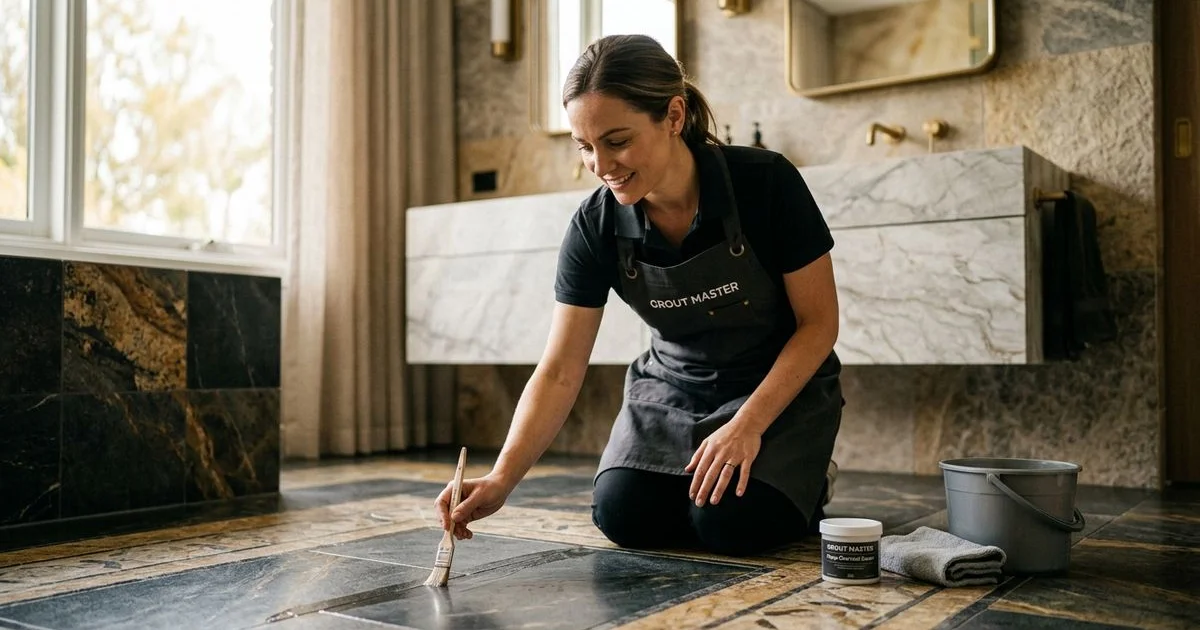
Our clients often ask exactly how to maintain the pristine look of their marble and travertine floors. You know how frustrating it is when a beautiful natural stone installation starts showing dark, dingy grout lines. This discoloration drives most homeowners to consider completely regrouting their surfaces.
Grout sealer does not last forever. We find that understanding exactly how often to clean and seal grout saves you time, money, and unnecessary costs. The harsh desert conditions in our local area accelerate this wear and tear on your investment.
Let’s review the data, what it means for your stone floors, and the precise schedule you need to follow.
The water test (60 seconds)
You should perform a quick moisture check every six months to determine if your floor needs immediate attention. Drop a few teaspoons of water directly onto a grout line in the room you are worried about.
Our technicians recommend waiting five to ten minutes to observe the reaction. If the water beads or sits on top, the sealer is still working. If it darkens the grout or absorbs in, the sealer is gone and needs to be reapplied.
Pro Tip: Always test high-traffic areas like entryways and primary bathrooms first, as these protective layers break down much faster than those in guest rooms.
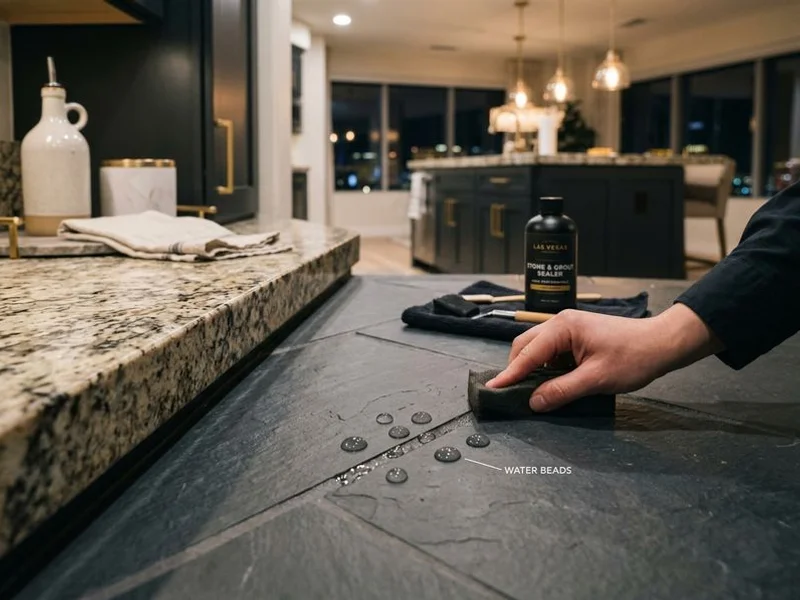
High-end natural stone finishes like travertine and marble are highly porous. We exclusively use premium impregnating sealers, such as StoneTech or Tenax Proseal, because they protect from within without altering the stone’s appearance. Surface-level sealers simply cannot provide the same defense against moisture.
Typical Las Vegas resealing intervals: How often to clean and seal grout
For most local homes, the general rule is to schedule an annual deep clean and reseal for high-traffic areas. We adjust these baselines slightly depending on the specific room and usage levels.
| Room | Cleaning | Sealing |
|---|---|---|
| Kitchen floors | Every 12-24 months | Every 12-18 months |
| Bathroom floors | Every 18-24 months | Every 12-18 months |
| Showers | Every 12 months | Every 12 months |
| Entryways and hallways | Every 12-18 months | Every 12-18 months |
| Laundry rooms | Every 24 months | Every 18-24 months |
| Low-use bathrooms | Every 24 months | Every 24 months |
The hard end of these ranges reflects our intense local conditions. According to the 2026 Southern Nevada Water Authority water quality summary, our local tap water hardness frequently measures between 275 and 310 parts per million (ppm).
Our team observes how this extreme mineral density creates heavy limescale on everything it touches. Fine desert grit and hot, dry interior air also combine to wear down protective barriers much faster than in milder climates.
Why cleaning and sealing belong together
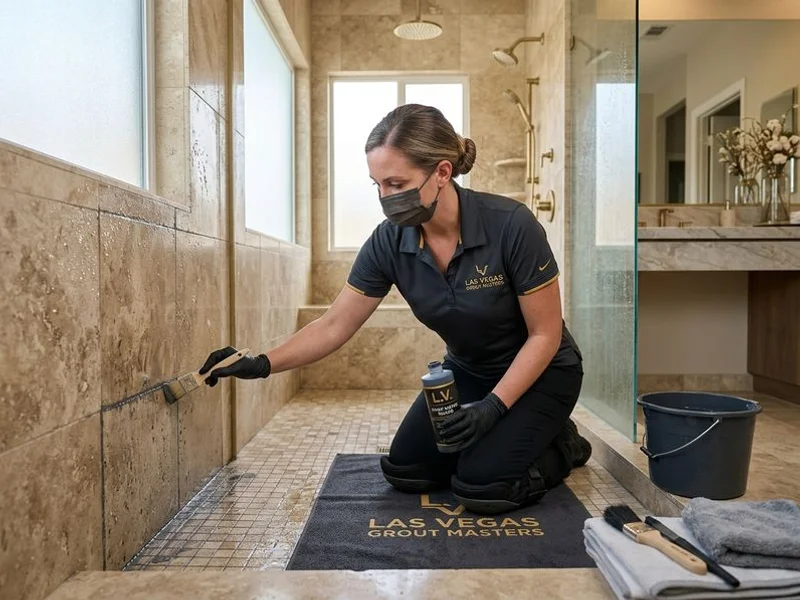
Cleaning removes the dirt and mineral scale that a new coat of sealer would otherwise trap permanently. A common mistake is applying fresh protection over a dirty floor. We always clean first, so you do not extend the life of stained grout by locking the discoloration inside.
Natural stone requires specific care during this process. Acidic cleaners will etch and destroy expensive marble and travertine surfaces. Our standard protocol involves using only pH-neutral stone cleaners prior to applying professional-grade products like Miracle Sealants 511 Impregnator.
Here are the critical reasons they must happen together:
- Pore Extraction: Agitation lifts deep-seated debris out of the grout matrix.
- Bonding Surface: Sealers require a perfectly clean surface to adhere properly.
- Color Preservation: Trapping dirt under a sealant layer makes it impossible to remove later.
Most professional crews bundle the two services together. This unified method leaves the pores completely clear before the protective barrier cures.
Signs you’ve waited too long
The most obvious sign of delayed maintenance is irreversible staining that routine mopping cannot fix. You must act quickly if you notice sudden changes in the appearance of your floor.
We advise clients to watch for these specific warning signals:
- Grout looks darker every month no matter how often you mop.
- Water sinks straight into the line during the 60-second test.
- Mildew shows up consistently in bathroom tile joints.
- Mineral film builds up rapidly around showers and fixtures.
Waiting too long allows moisture to migrate below the surface and carry stains deep into the stone. We can usually reverse this damage, but early prevention is always the most cost-effective strategy.
See our tile and grout cleaning and coloring service for what this restoration process looks like in practice. Figuring out exactly how often to clean and seal grout protects your property value for years. Reach out to schedule your professional assessment today.
Need this work done in Las Vegas?
Our certified technicians handle this professionally with full home protection and a free, no-obligation on-site estimate.
See tile grout cleaning coloringCommon questions
How often should grout be resealed? +
Typically every 1-2 years, sooner in high-traffic or wet areas where the sealer wears faster.
How do I know my grout needs resealing? +
If water no longer beads on the grout and it stains easily, it's time to reseal.
Should I clean and reseal at the same time? +
Yes. Sealing freshly cleaned grout locks in the result. Sealing over dirty grout traps the discoloration.
Related guides
Grout Color Sealing vs Clear Penetrating Sealing: Which Is Best?
Color seal vs clear penetrating seal for grout: what each does, when to use each, and how the look and durability differ.
How Professional Tile and Grout Cleaning Works
Step-by-step look at pro tile and grout cleaning: alkaline pretreatment, high-pressure extraction, and optional color sealing.
Regrouting vs Grout Cleaning and Recoloring: Which Do You Need?
When you actually need to regrout vs. when professional cleaning and color sealing will solve the problem at a fraction of the cost.

Restore it, don't replace it.
Schedule a free on-site estimate from certified Las Vegas stone and tile technicians.