
Can Scratched or Pitted Travertine Be Repaired?
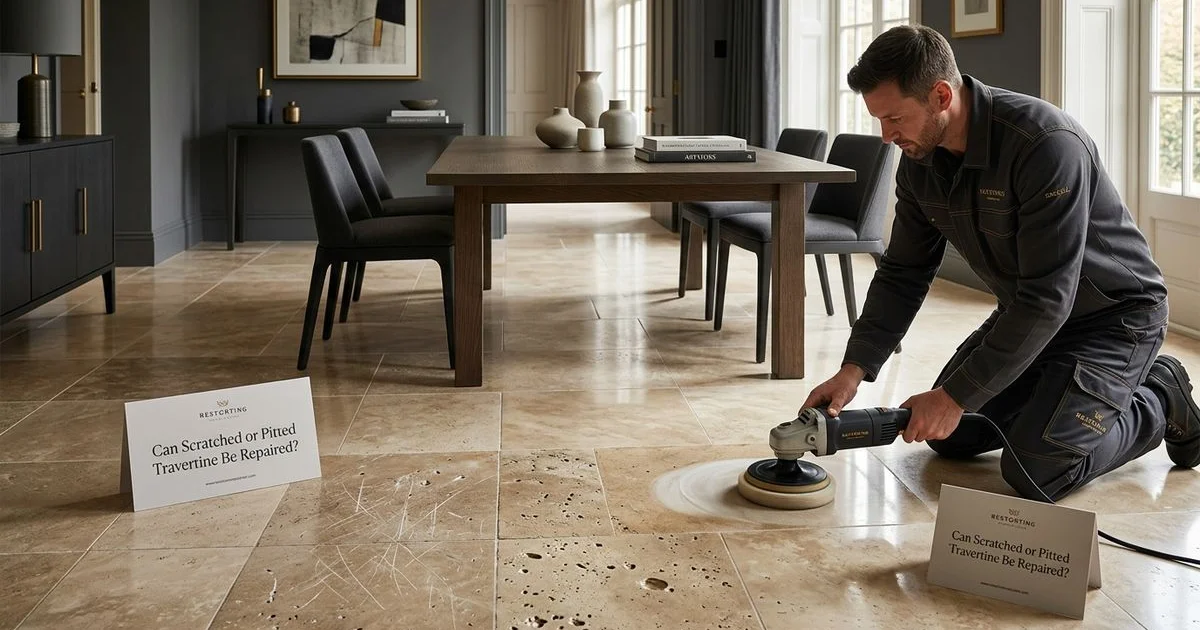
Many Las Vegas homeowners call us in a panic when their high-end natural stone floors start showing signs of wear.
They see new holes or scratches and assume the floor is ruined forever.
We hear this exact concern every week.
Can scratched or pitted travertine be repaired?
The answer is a resounding yes.
Travertine is a sedimentary stone defined by its natural voids. Fabricators fill these holes during production, but those original fills can pop out under normal household traffic.
Most perceived damage is entirely cosmetic and easily reversible. Let us look at exactly why this stone wears down and the exact steps required to bring it back to life.
Why travertine wears the way it does
Travertine wears down because it is naturally porous and relatively soft compared to the elements tracked into your home. This sedimentary stone is full of natural voids that were filled at the factory before your floor was ever installed.
We constantly see the effects of the Mojave Desert on high-end floors. The gritty dust blowing around Las Vegas is primarily quartz, which sits at a solid 7 on the Mohs hardness scale.
Travertine only ranks between a 3 and 4 on that same scale. Walking across your floor with microscopic sand on your shoes acts exactly like sandpaper on a piece of wood.
- Microscopic quartz sand tracked in from outside.
- Acidic spills like wine or citrus juice etching the surface.
- Heavy furniture shifted without protective pads.
- Standard traffic degrading the original factory resin fills.
Foot traffic and dropped objects gradually degrade the factory finish. Over time, the original factory resin shrinks or simply pops out of the natural voids, opening up new pits as the surface layers wear away.
How restoration brings it back
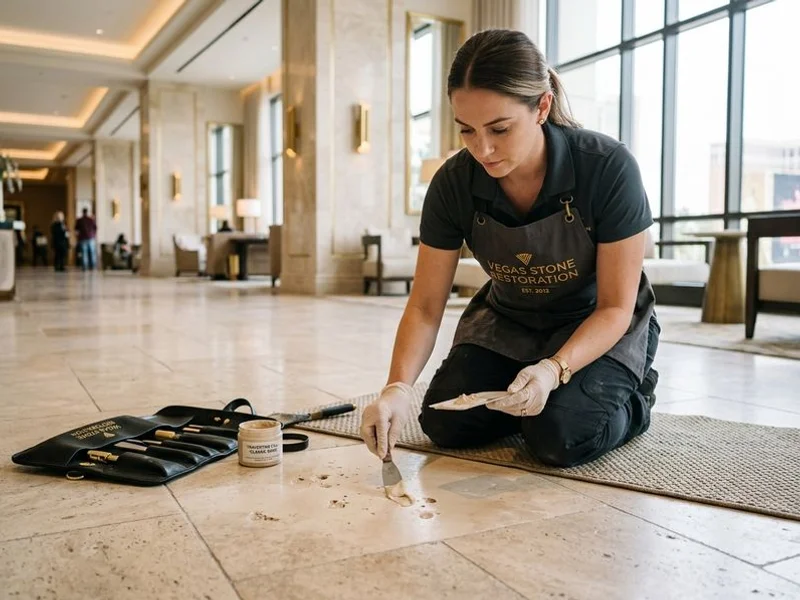
Restoration brings travertine back by physically removing the damaged microscopic top layer and replacing missing structural fills. The procedure relies on industrial diamond abrasives and specialized resins to recreate a flawless surface.
Our technicians follow a strict protocol to restore damaged travertine correctly.
- Preparation and Filling: Open pits and small voids are filled with color-matched polyester or epoxy resins. Industry standard products like Tenax cure harder than the stone itself to prevent future popping.
- Lippage Removal: Diamond grinding levels the uneven edges between tiles to create a perfectly flat floor plane.
- Diamond Honing: A progressive sequence of abrasive pads removes scratches. A typical sequence moves from 200-grit to 800-grit to bring the surface to a consistent matte.
- Custom Polishing: Polishing elevates the finish to your chosen level of shine. Most travertine looks best at a honed or semi-polished state.
- Protective Sealing: A pet-safe penetrating sealer protects the finished surface. We use premium water-based fluoropolymer sealers that sink deep into the pores to repel oil and water stains.
When replacement actually matters
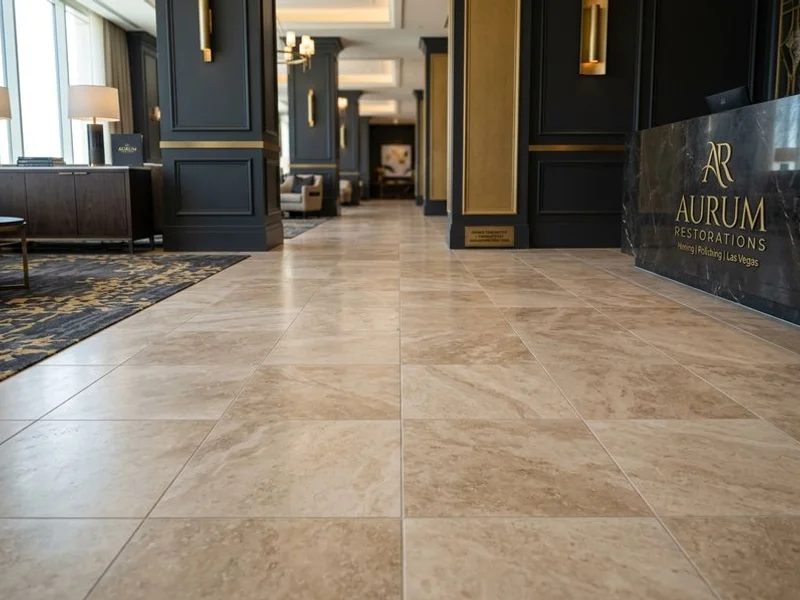
Replacement only matters when the tile is completely fractured, delaminated from the subfloor, or suffering from severe structural water damage. The honest answer is that tearing out natural stone is very rarely necessary.
Cosmetic damage is almost always entirely recoverable. Even significant pitting across a large area can be filled and honed back to factory standards.
We see homeowners assume a floor is ruined when a professional can easily save it.
| Option | Estimated 2026 Cost (Per Sq Ft) | Project Timeline |
|---|---|---|
| Professional Restoration | $3.00 - $7.00 | 1 to 3 Days |
| Full Tile Replacement | $15.00 - $30.00+ | 2 to 3 Weeks |
Current industry data makes the financial choice clear. For Las Vegas valley homeowners, travertine restoration is a fraction of the cost of replacement and avoids the dust, demolition, and downtime of retiling. You get a floor that looks brand new without turning your home into a construction zone.
Subfloor issues are the main exception to this rule. If your concrete foundation has cracked and telegraphed that crack completely through multiple tiles, those specific pieces require replacement. A stone care specialist can replace just the broken individual tiles and perfectly blend them into the rest of the restored floor.
Professional Insight: You do not have to live with dull, damaged stone. If you are wondering if your specific floor can be saved, reach out to an expert for a local assessment.
In almost every case, can scratched or pitted travertine be repaired? Yes, it absolutely can. Contact our team today to schedule an evaluation and bring your stone back to its original beauty.
Need this work done in Las Vegas?
Our certified technicians handle this professionally with full home protection and a free, no-obligation on-site estimate.
See marble travertine polishingCommon questions
Can holes and pits in travertine be filled? +
Yes. We fill pits with color- and density-matched fillers, then hone the surface so the repairs blend in.
Does travertine need to be replaced if it's scratched? +
Rarely. Most scratched or pitted travertine can be ground, honed, and re-polished instead of replaced.
Why does my travertine pit in the first place? +
Travertine is naturally porous. Vegas desert grit, dropped items, and even just years of foot traffic can open up pits. Filling them and re-honing the surface restores the look.
Related guides
Honing vs Polishing: Which Finish Does Your Stone Need?
Matte honed or glossy polished? A practical comparison of slip resistance, maintenance, look, and best fit for each finish.
How Often Should You Seal Natural Stone in the Desert?
Resealing intervals for marble, travertine, and granite in the Las Vegas climate. Easy water-test method and signs your sealer has worn off.
How Much Does Marble and Travertine Polishing Cost in Nevada?
Typical price ranges for marble and travertine polishing across Nevada, what drives the cost, and how a free on-site estimate works.
Restore it, don't replace it.
Schedule a free on-site estimate from certified Las Vegas stone and tile technicians.