
How Often Should You Seal Natural Stone in the Desert?
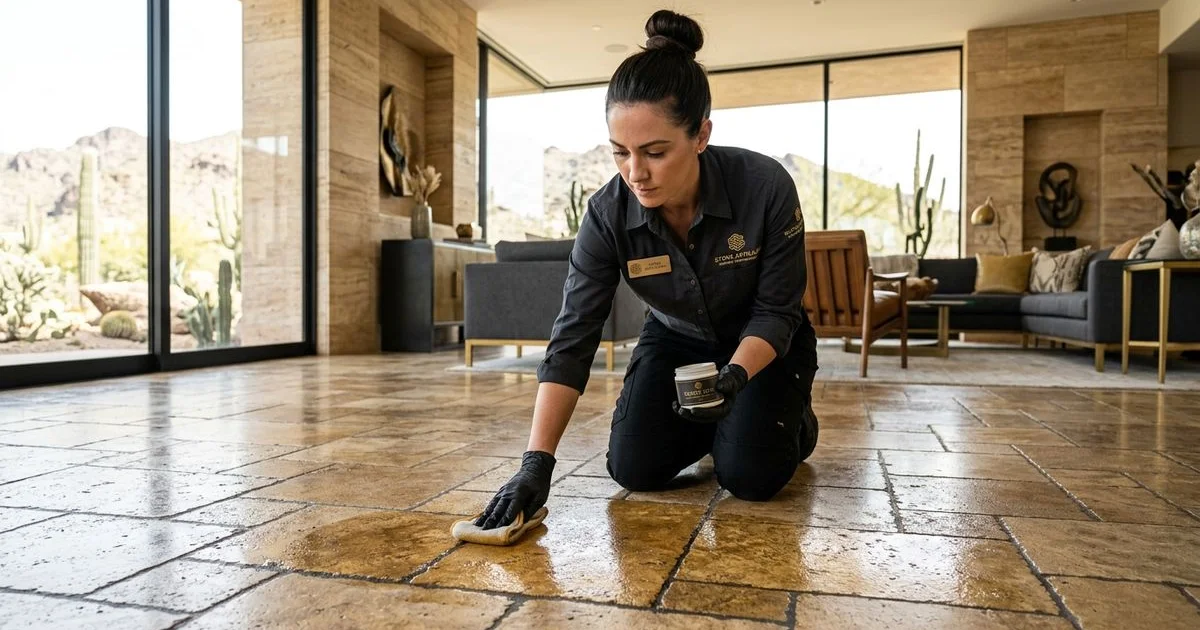
Our team at Elite Tile and Grout Cleaning specializes in superior floor restoration. Homeowners often ask us how often to seal natural stone finishes to protect them from the harsh Nevada environment. If you manage a property here in the valley, your marble and travertine face a daily battle against desert grit, intense UV rays, and incredibly mineral-heavy tap water.
Sealing acts as the ultimate defense line.
The process works exactly the way staining a wood deck does. Without that protective barrier, the surface absorbs every single thing thrown its way. Proper sealing slows the deterioration process down significantly.
Let’s look at the data, what it is actually telling us, and then explore a few practical ways to respond.
The simple water test
We recommend using the standard water drop test to check your stone’s porosity and current seal condition. Simply drop a few teaspoons of water onto an inconspicuous area and wait for 15 to 30 minutes.
While the original advice suggests 5 to 10 minutes, testing from Granite Gold reveals that denser materials need the full 30 minutes to truly show absorption. Look for these specific reactions:
- Beading water: If the water beads on top and wipes away clean, the sealer is still doing its job.
- Darkening stone: A dark mark or ring means the water has penetrated the pores.
- Complete absorption: If the water disappears entirely, the seal is completely gone.
Once the water penetrates, the surface needs to be resealed immediately. Many homeowners make the mistake of testing just one spot. Our technicians always check high-traffic areas, like right in front of the kitchen sink or the main shower floor, because the sealer wears away much faster there. You must test these specific zones to get an accurate reading.
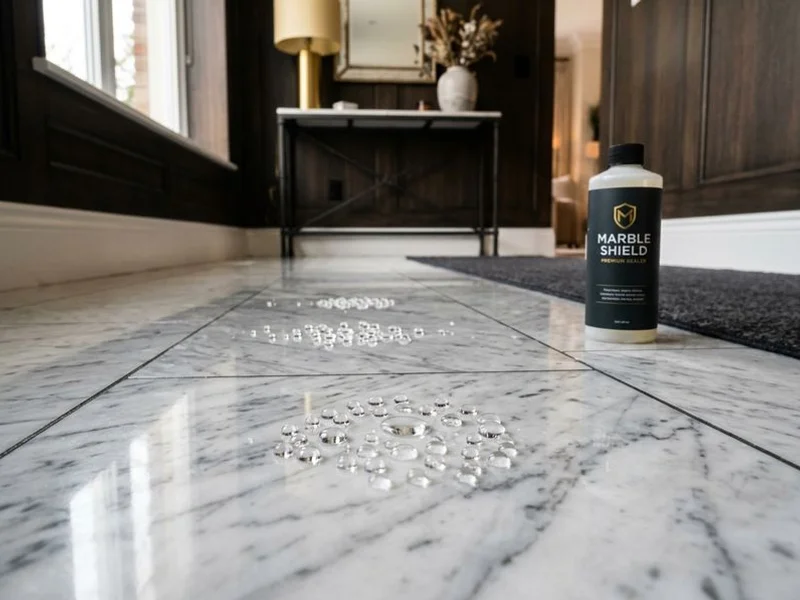
Typical Las Vegas resealing schedule: How often to seal natural stone
Our established resealing schedule depends heavily on the stone’s location and daily wear. High-traffic floors need attention every 1 to 2 years, while stone showers require service every 12 to 18 months.
The constant exposure to local water and UV rays accelerates wear compared to milder climates. To keep your maintenance on track, follow this specific timeline for valley homes:
- Stone showers: Reseal every 12 to 18 months to fight off constant moisture and the 278-PPM mineral hardness.
- Marble and travertine floors: Plan for every 1 to 2 years in high-traffic hallways or kitchens, and every 2 to 3 years for low-traffic bedrooms.
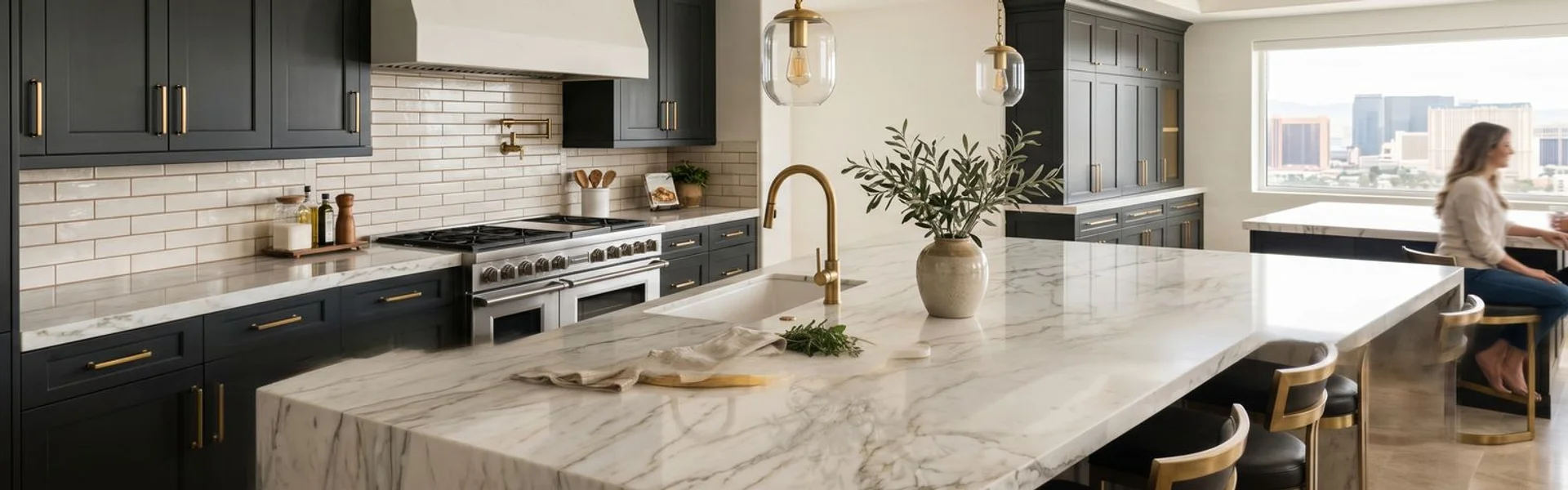
- Stone countertops: Kitchen islands need sealing every 12 to 24 months due to acidic food spills, while bathroom vanities can last slightly longer.
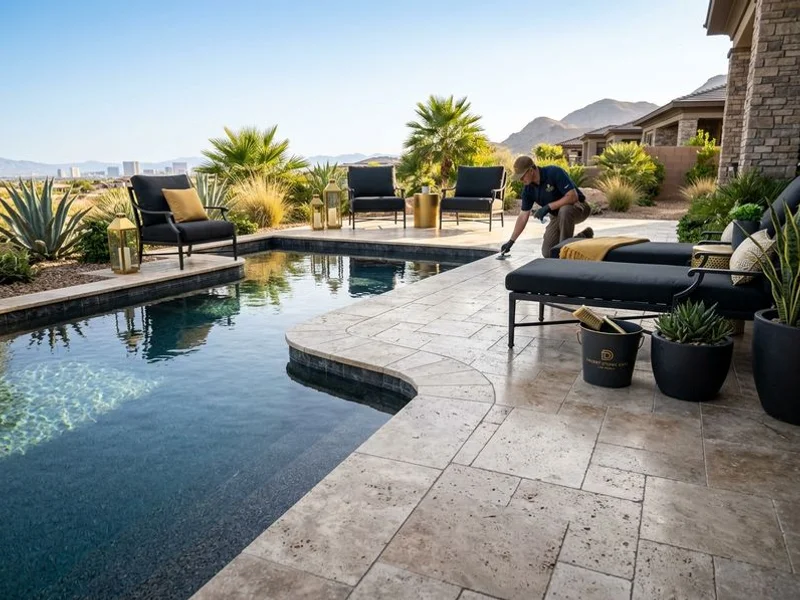
- Outdoor travertine and limestone: Apply a fresh coat every 1 to 2 years because the intense UV index bakes the protective layer away.
We often see clients assume a single schedule works for the whole house. The reality is that your pool deck takes a much harsher beating than your guest bathroom.
Why Vegas water and heat matter
Tap water in the Las Vegas valley runs around 278 to 304 parts per million (PPM) in mineral hardness. This extreme level requires specialized penetrating sealers to prevent rapid deterioration.
The U.S. Geological Survey classifies anything over 180 PPM as “very hard” water. Our local supply, sourced from the Colorado River, picks up massive amounts of dissolved calcium and magnesium along its journey. These minerals bond instantly to unsealed stone and leave heavy, destructive deposits.
To combat this environment, choosing the right chemical defense is critical.
| Sealer Type | Desert Heat Reaction | Best Application |
|---|---|---|
| Topical Acrylics | Turns yellow and flakes off under UV exposure | Avoid outdoors in Nevada |
| Penetrating Silane/Siloxane | Soaks into pores and remains UV stable | High-heat outdoor and shower areas |
Add 110-degree summer heat and direct sun to the mix, and standard acrylic sealers designed for milder climates burn through fast. The intense desert sun turns these cheap acrylic coats yellow and flaky within a single season.
”The summer heat will turn most topical sealers flakey, and it is a nightmare to take off. Always use a penetrating sealer for outdoor pavers.”
We strictly recommend using penetrating silane or siloxane sealers built for hot and dry conditions. These professional-grade products soak deep into the pores rather than sitting on top, holding up dramatically better against UV damage and hard water scaling.
If you are still wondering how often to seal natural stone, the simplest rule is to test it annually. We can reseal as a standalone service or as part of a full marble and travertine restoration.
Need this work done in Las Vegas?
Our certified technicians handle this professionally with full home protection and a free, no-obligation on-site estimate.
See marble travertine polishingCommon questions
How do I know if my stone needs resealing? +
Drop water on it. If it darkens or soaks in quickly instead of beading, the sealer has worn off.
How often should natural stone be sealed in Las Vegas? +
Most stone benefits from resealing every 1-3 years. High-traffic and hard-water-exposed areas may need it sooner.
Are water-based sealers really pet- and child-safe? +
Yes. Modern water-based penetrating sealers cure quickly, are odor-free, and are safe for homes with pets and children once dry.
Related guides
Can Scratched or Pitted Travertine Be Repaired?
Travertine scratches, pits, and lippage are almost always restorable. Here's how filling, honing, and polishing work in real Las Vegas homes.
Honing vs Polishing: Which Finish Does Your Stone Need?
Matte honed or glossy polished? A practical comparison of slip resistance, maintenance, look, and best fit for each finish.
How Much Does Marble and Travertine Polishing Cost in Nevada?
Typical price ranges for marble and travertine polishing across Nevada, what drives the cost, and how a free on-site estimate works.
Restore it, don't replace it.
Schedule a free on-site estimate from certified Las Vegas stone and tile technicians.