
How to Remove Hard Water Stains and Soap Scum from Stone Showers
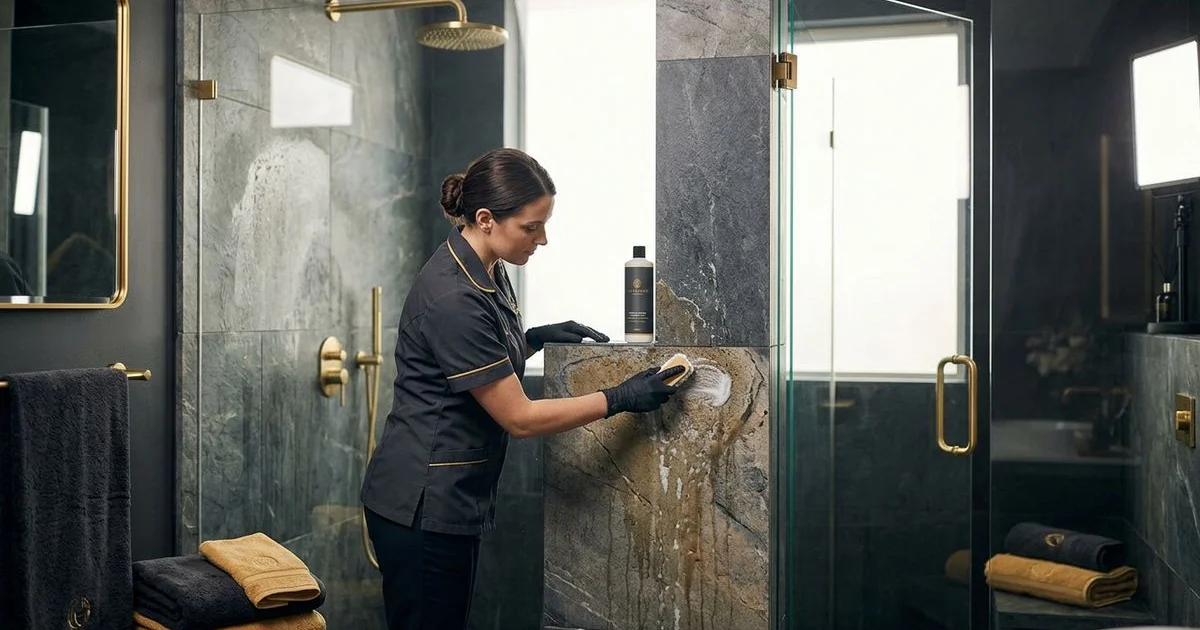
We see the same frustration from homeowners every single week. That once-gorgeous custom marble shower slowly loses its shine. The surface becomes covered in a stubborn, chalky film that resists every scrubbing attempt.
Our team knows this is a direct result of extreme mineral concentration in the local water supply.
Las Vegas Valley Water District reports for 2026 show local water hardness levels hitting between 291 and 304 parts per million. Figuring out how to safely remove hard water stains from stone shower surfaces requires looking at the chemistry behind the buildup, understanding why standard cleaning hacks make it worse, and knowing the proper repair methods.
What’s actually happening
We constantly remind clients that two very different chemical processes are destroying their shower at the same time. These distinct issues require completely different solutions to correct.
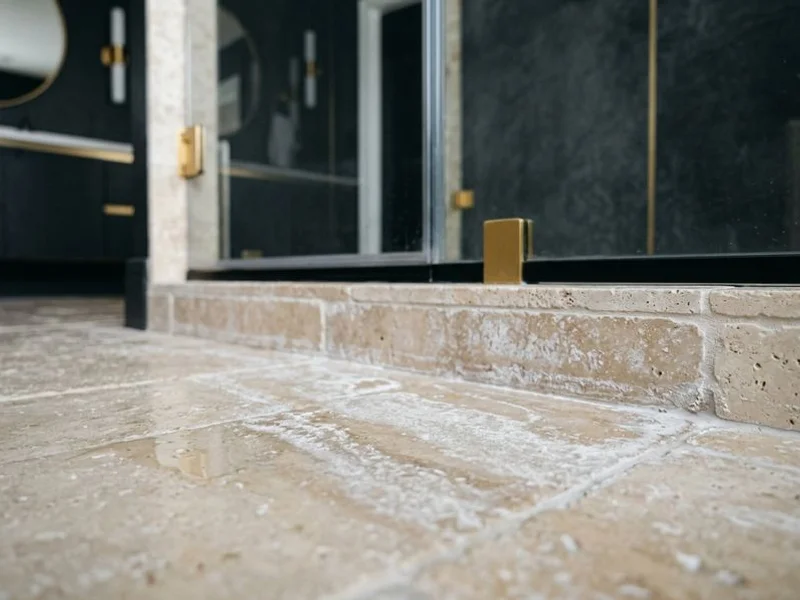
- Mineral deposits on the surface. Because roughly 90 percent of local tap water originates from the highly eroded Colorado River, the Southern Nevada Water Authority confirms it carries massive amounts of dissolved calcium and magnesium. Our technicians find that these minerals bond with ordinary body soap to create a hardened layer known as calcium stearate. This waterproof crust acts like a layer of cement over your beautiful tile, meaning standard scrubbing simply will not lift it.
- Etching of the stone itself. Natural stones like marble and travertine consist primarily of calcium carbonate. When acidic soap residues and hard water sit on this calcium carbonate, a chemical reaction slowly dissolves the microscopic surface layers. We see this chemical damage permanently dulling the factory polish, leaving a finish that looks foggy regardless of how vigorously you clean it.
Why acidic descalers ruin stone
Our most urgent warning for homeowners is to avoid hardware store descaling chemicals entirely. The popular internet solution for hard-water buildup involves using acidic liquids like CLR, Lime-A-Way, or plain white vinegar. These work brilliantly on glass and porcelain, but they are absolutely catastrophic on natural stone.
Let’s look at the raw chemistry behind these common products. White vinegar contains acetic acid with a highly acidic pH of around 2.4, while heavy-duty industrial cleaners drop even lower to a pH of 2.1. We watch these acids react instantly with the calcium carbonate in your marble, converting the solid stone into soluble calcium acetate and carbon dioxide bubbles.
This reaction eats into the surface exactly the way a spilled glass of wine ruins a kitchen countertop. You are literally dissolving your shower walls just to remove a surface stain. Our estimating teams frequently see showers completely ruined by DIY cleaning, and current 2026 remodeling data from Modernize shows high-end replacement costs routinely hitting $10,200 to $15,000.
| Cleaner Type | Average pH Level | Effect on Marble & Travertine |
|---|---|---|
| White Vinegar | 2.4 (Highly Acidic) | Causes immediate etching and dulling |
| CLR / Lime-A-Way | 2.1 (Severely Acidic) | Dissolves surface layers, permanent damage |
| Neutral Stone Cleaner | 7.0 (Neutral) | Safe for daily maintenance, no etching |
The safe restoration process
We utilize a highly specific, mechanical approach to restore the finish rather than relying on harsh chemicals. This professional process is the only proven way to remove hard water stains from stone shower environments while correcting the physical damage beneath.
Breaking Down the Restoration Steps
- Chemical-free mineral stripping. Heavy-duty alkaline formulas, like Viper Stone Perfect, possess the high pH needed to break down organic soap film. Our technicians apply these targeted cleaners to lift the calcium stearate barrier without dissolving the calcium-based stone underneath.
- Mechanical diamond honing. Once the surface is clean, the actual etching remains visible as dull, rough spots. We use specialized resin-bonded diamond abrasive pads, starting around 400-grit and progressing upward, to physically shave off the microscopic damaged layer of stone.
- Custom polish restoration. Honing leaves the stone smooth but matte. Friction and specialized polishing compounds bring the marble or travertine back to your original preferred gloss level.
- Deep penetrating protection. The final step requires applying a premium, pet-safe penetrating sealer. Our preferred sealers dive deep into the pores of the stone to create an invisible barrier, which dramatically slows future mineral absorption.
A crucial insider tip is to ensure your contractor uses a continuous clean-water extraction system during this process. Standard mop buckets simply redistribute the dissolved minerals right back into your porous grout lines. We guarantee a spotless finish by vacuuming away the slurry instantly.
Keeping it clean afterward
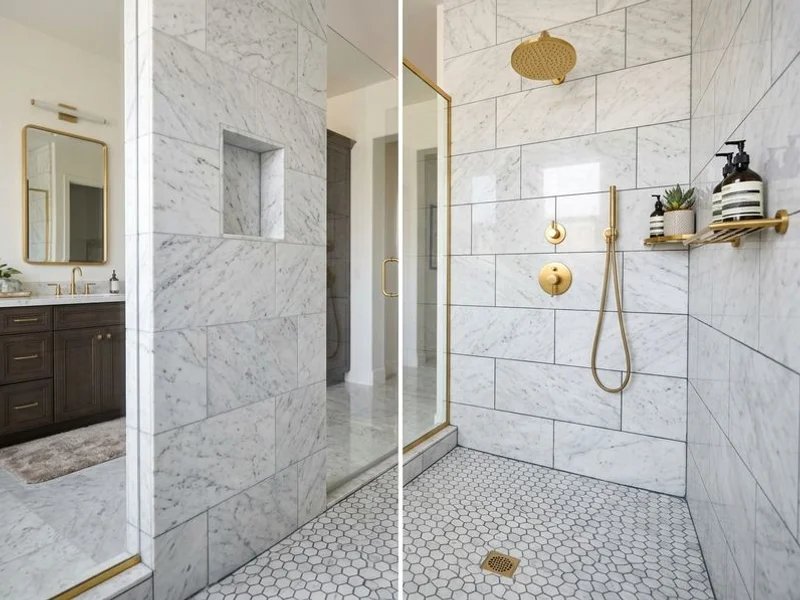
We always tell clients that proper maintenance prevents the need for another costly restoration. Once the stone is sealed and polished, daily care requires minimal effort but maximum consistency.
Our maintenance teams recommend two specific daily and weekly habits:
- The 30-Second Squeegee: Use a high-quality silicone squeegee immediately after turning off the water. This removes roughly 95 percent of the mineral-heavy water before it evaporates.
- The 7.0 pH Wash: Switch exclusively to a pH-neutral stone cleaner for weekly cleaning. These products clean effectively without stripping the protective sealant.
This simple combination of safe chemistry and quick physical water removal dramatically slows the return of buildup, ensuring you won’t have to remove hard water stains from stone shower walls ever again.
For Las Vegas homes dealing with damaged stone showers, our countertop and shower restoration service handles this regularly across the valley.
Need this work done in Las Vegas?
Our certified technicians handle this professionally with full home protection and a free, no-obligation on-site estimate.
See countertop shower restorationCommon questions
Why can't I use a normal descaler on my stone shower? +
Acidic descalers etch and dull natural stone. Hard-water deposits must be removed with stone-safe methods instead.
Will sealing stop hard water stains from coming back? +
Sealing makes the surface far easier to keep clean and slows deposit buildup, though regular care is still recommended.
Can really bad shower etching be fixed? +
Yes. Even shower walls that look fogged solid can be honed and repolished. Most of the time, restoration beats demo and retile.
Related guides
How to Fix a Cracked Granite Countertop Near the Sink
Why granite cracks near sinks, why DIY epoxy fails, and how professional stabilization and color-matched repair restore the slab.
How Often Should You Seal Natural Stone in the Desert?
Resealing intervals for marble, travertine, and granite in the Las Vegas climate. Easy water-test method and signs your sealer has worn off.
How to Protect Marble Countertops from Acid Etching
What everyday liquids etch marble, why sealing alone doesn't prevent etching, and the daily habits that actually keep marble countertops looking new.
Restore it, don't replace it.
Schedule a free on-site estimate from certified Las Vegas stone and tile technicians.