
Why Grout Gets Stained and Discolored (and What Removes It)
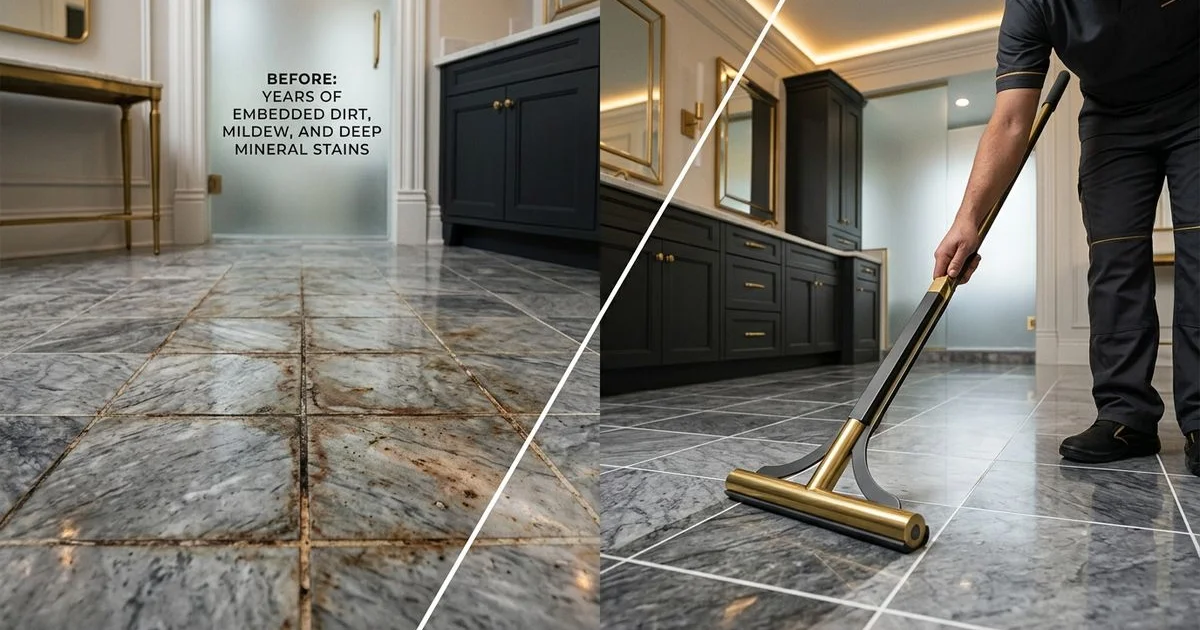
We constantly see stunning natural stone floors compromised by dark, dingy lines, which leads many homeowners to ask exactly why grout gets stained. Grout discoloration remains one of the most universal, yet misunderstood, home complaints.
The reality is that your grout is not simply dirty in the way a living room carpet gets dirty. Our technicians regularly explain that this porous material is actually fully saturated with contaminants.
Let’s look at the exact data behind this common problem and explore the professional methods used to restore it.
What’s actually staining grout: The science of why grout gets stained
Cement-based grout acts like a hard sponge that readily absorbs embedded dirt, microscopic mold spores, and heavy mineral deposits. We find that these three specific factors drive the vast majority of severe discoloration issues.
The naturally porous matrix locks these elements deep beneath the surface. You cannot simply wipe them away with standard bathroom cleaners.
The impact of embedded dirt
Our crews see airborne particles and tracked-in soil work into the grout and lock in permanently. The material slowly darkens from below the surface as foot traffic continues.
Commercial floor maintenance data confirms that regular foot traffic introduces a massive amount of microscopic grit daily. We have noticed that this grit acts like sandpaper against your high-end marble or granite finishes.
The resulting friction pushes the finest dirt particles directly down into the grout lines. This creates a stubborn, darkened appearance that standard sweeping completely misses.
Bathroom mold and mildew
Our local inspections reveal that damp areas create the perfect breeding ground for invasive fungi. Mildew grows rapidly inside the grout pores and turns them black or dark gray.
Stachybotrys chartarum and Aspergillus represent the most common mold strains found in humid bathroom environments. We always warn homeowners that these specific spores thrive on soap scum and trapped moisture.
The mold roots itself deeply into the cement base. Surface scrubbing only removes the top layer, allowing the fungi to return quickly.
Severe hard water deposits
Our experience shows that mineral residue compounds with dirt and mold to create a cement-like crust. The Las Vegas Valley Water District’s 2026 reports confirm our local tap water has a total hardness of 291 parts per million.
This extreme hardness leaves chalky calcium and magnesium deposits on everything it touches. We constantly battle this 291 PPM mineral residue because it forcefully binds with organic soils.
The resulting scale coats the grout lines and dulls the surrounding natural stone. Standard acidic cleaners can dissolve this scale, but they will also etch and ruin your delicate travertine.
Why mopping makes it worse
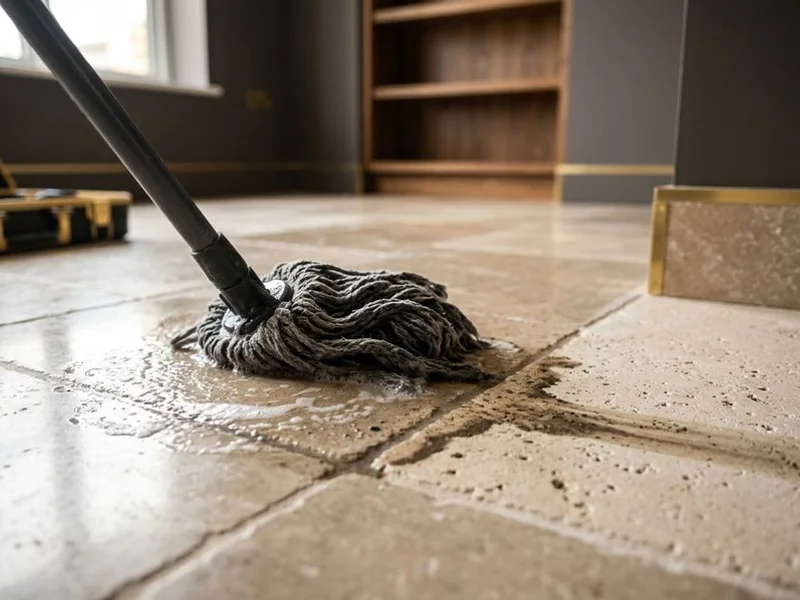
Our tests prove that standard mopping simply picks up dirt from the tile surface and pushes it directly into the porous grout. The clean tile sheds the liquid, but the absorbent grout lines soak up the contaminated water. Every single mop pass deposits more material into the matrix, which explains why floors look worse over time.
We strongly advise against using traditional cotton string mops for this exact reason. A clinical study on cross-contamination revealed that conventional wet mops leave up to 70 percent of bacteria and soil behind. The dirty mop bucket water essentially turns into a liquid soil that stains your floors from the inside out.
Our technicians recommend switching to a dual-compartment bucket system and clean microfiber pads. Microfiber materials attract and hold up to 99 percent of dirt without flooding the floor with excess water. This simple tool upgrade prevents the soapy, dirty residue from settling into the grout channels.
| Mop Type | Dirt Removal Rate | Grout Impact |
|---|---|---|
| Traditional Cotton String | ~30% | Floods pores with dirty water |
| Flat Microfiber Pad | Up to 99% | Lifts soil without over-saturating |
What actually removes the embedded dirt
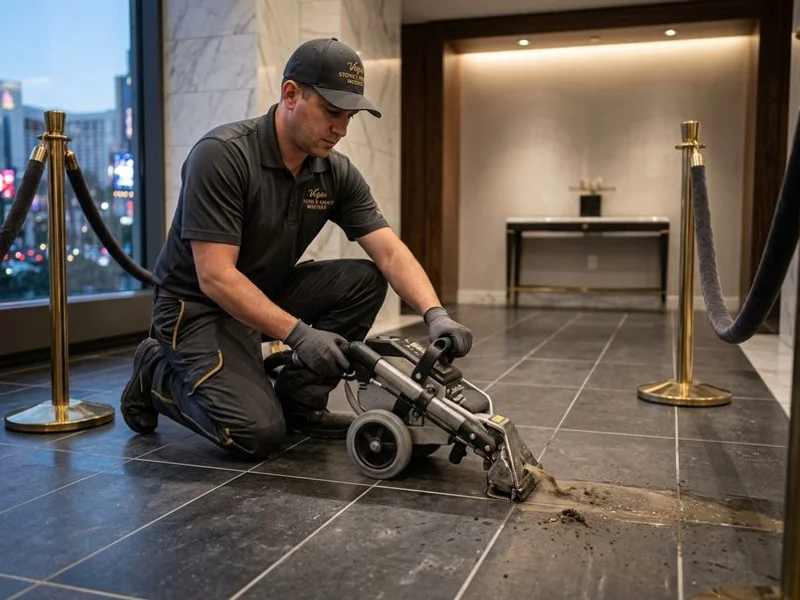
We rely on high-pressure heated extraction because professional equipment physically pulls the dirt out instead of pushing it deeper. This industrial process is genuinely different from renting a consumer machine or scrubbing with household tools.
The specialized equipment breaks the bond between the porous cement and the stubborn contaminants. Our exact extraction methodology follows four strict steps to protect your natural stone:
- Alkaline pre-treatment: Specialized cleaning solutions break open the grout’s pores and lift embedded particles without utilizing damaging acids. The high pH formula targets grease and organic soils safely.
- High-pressure heated extraction: We utilize a specialized turbo tool that operates at 1,000 PSI to blast away grime. The system pairs this extreme pressure with superheated water reaching 200 degrees Fahrenheit to sanitize the surface instantly.
- Rapid extraction and drying: The attached vacuum recovers the soiled water immediately, leaving no messy residue behind. Our clients appreciate that most rooms are completely walkable within a few hours.
- Optional color sealing: A premium sealant is applied to grout that will not come fully clean. This final step locks out future stains while providing a uniform, pristine appearance.
When recoloring is the better answer
We recommend professional recoloring when permanent staining, deep mildew penetration, or severe acid etching prevents the grout from coming fully clean. Some grout lines simply will not restore to their original state regardless of the heat or pressure applied.
Discoloration from harsh chemical spills or years of neglect often permanently alters the cement base. Our team uses an advanced epoxy-based colorant to completely transform these damaged areas.
- The recoloring process bonds a new, waterproof pigment directly over the existing matrix.
- This treatment creates a highly durable, stain-resistant barrier that stops future moisture penetration instantly.
We invite you to view the stunning results of this process, especially now that you understand exactly why grout gets stained. You can easily browse over 100 custom shade matches to find the perfect fit, so please see our tile and grout cleaning and coloring service to discover exactly what that flawless finish looks like.
Need this work done in Las Vegas?
Our certified technicians handle this professionally with full home protection and a free, no-obligation on-site estimate.
See tile grout cleaning coloringCommon questions
Why does my grout keep getting dirty after I mop? +
Mopping pushes dirty water into porous grout, where it dries and darkens. Professional extraction pulls it out instead.
Can permanently stained grout be fixed? +
Yes. When cleaning isn't enough, grout recoloring restores a uniform, sealed finish.
How does grout get so dirty in the first place? +
Grout is porous, so it absorbs everything: dirt, food, mineral-heavy hard water, mildew. Without sealing, it darkens visibly every year.
Related guides
Grout Color Sealing vs Clear Penetrating Sealing: Which Is Best?
Color seal vs clear penetrating seal for grout: what each does, when to use each, and how the look and durability differ.
How Often Should Grout Be Cleaned and Resealed?
Recommended intervals for professional grout cleaning and resealing by room and traffic. Signs your sealer has worn off.
How Professional Tile and Grout Cleaning Works
Step-by-step look at pro tile and grout cleaning: alkaline pretreatment, high-pressure extraction, and optional color sealing.

Restore it, don't replace it.
Schedule a free on-site estimate from certified Las Vegas stone and tile technicians.