
How to Remove Etch Marks and Dull Spots from Marble
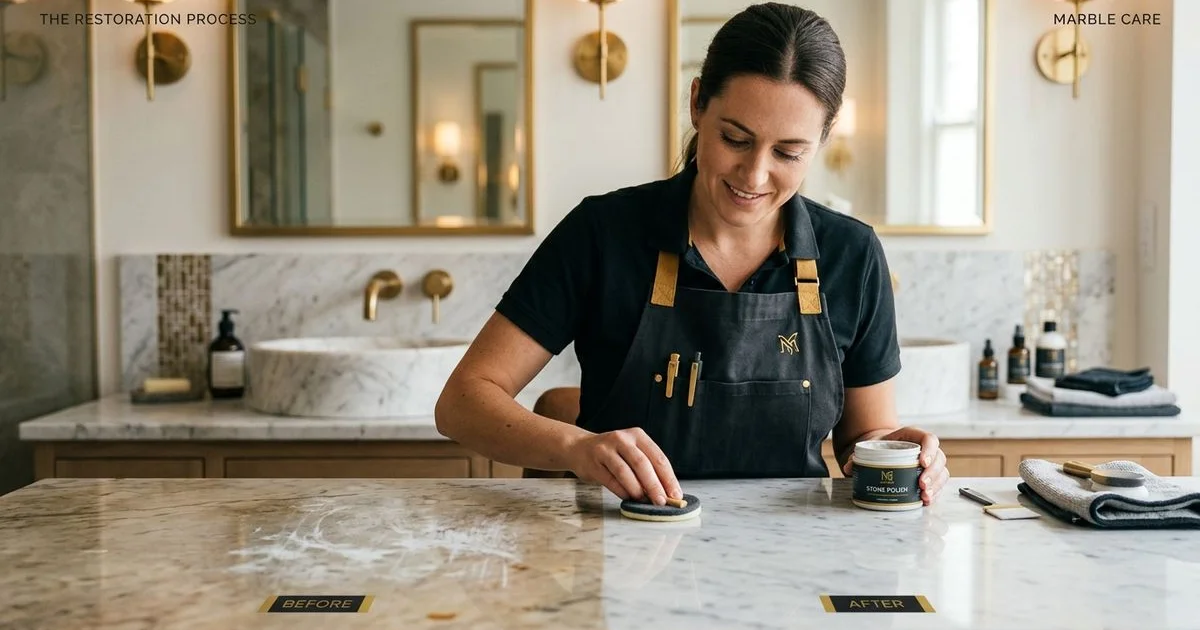
We see these dull, foggy spots constantly across high-end homes.
Acidic liquids like wine, citrus juice, vinegar, and tomato sauce quickly eat into the stone surface and destroy the polish. The result is a persistent watermark that refuses to wipe away, which can easily trick you into thinking the stone is dirty.
Our team knows how frustrating it is to scrub a counter for hours with no result.
Here is the exact science behind the chemical damage, along with a complete breakdown of how to remove etch marks from marble.
Etching is physical damage, not staining
An etch mark is not dirt sitting on top of the marble. The acid has actually dissolved a microscopic layer of the stone’s surface.
We often explain this to clients by comparing the stone to a piece of wood with a physical scratch. The calcium carbonate in marble reacts instantly with acidic substances. A slice of lemon has a highly acidic pH level of around 2.0. This acidity immediately triggers a chemical burn that strips away the polished finish.
Our technicians frequently receive calls from homeowners trying to lift these spots with sponge scrubbers. There is simply nothing to lift off. You are looking at a shallow crater where the shiny surface used to be.
To clarify the difference between surface damage and deep discoloration, review this breakdown:
| Characteristic | Marble Etching | Marble Staining |
|---|---|---|
| Cause | Chemical reaction with acids (citrus, wine) | Porous absorption of liquids (oil, coffee) |
| Appearance | Dull, foggy, or lighter-colored watermarks | Darkened discoloration deep in the stone |
| Solution | Physical honing and re-polishing | Chemical extraction using a poultice paste |
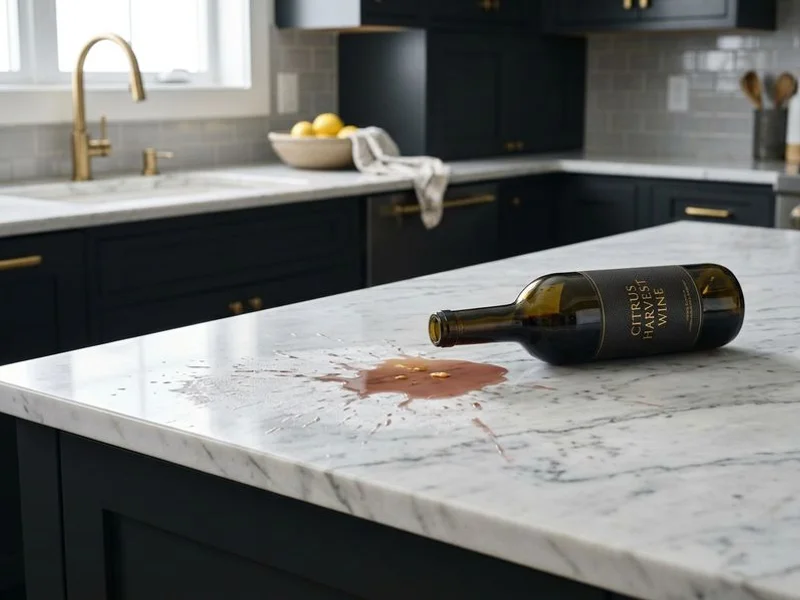
Why DIY acids make it worse
Applying stronger acids to neutralize an etch mark is the wrong approach. Acids of any kind will only eat further into the calcium carbonate makeup of the marble.
We have seen countless countertops ruined by internet forums recommending white vinegar for spot cleaning. White vinegar carries an extremely acidic pH level of roughly 2.4. Pouring it onto an existing etch mark accelerates the chemical burn and deepens the crater.
Our restoration crews also see severe damage caused by natural bathroom cleaners. Products featuring citric acid are highly marketed right now. These cleaners act just like lemon juice and will immediately strip the shine off your vanity.
Avoid using the following chemical profiles on your stone:
- Vinegar-based formulas: They create deep chemical burns within seconds of contact.
- Citric acid products: Natural orange and lemon extracts dissolve the stone finish.
- Bleach and ammonia: These harsh bases dull the polish and weaken the protective sealant.
- Descaling bathroom sprays: Heavy-duty calcium removers will literally dissolve a calcium-based stone.
How professional restoration removes etch marks from marble
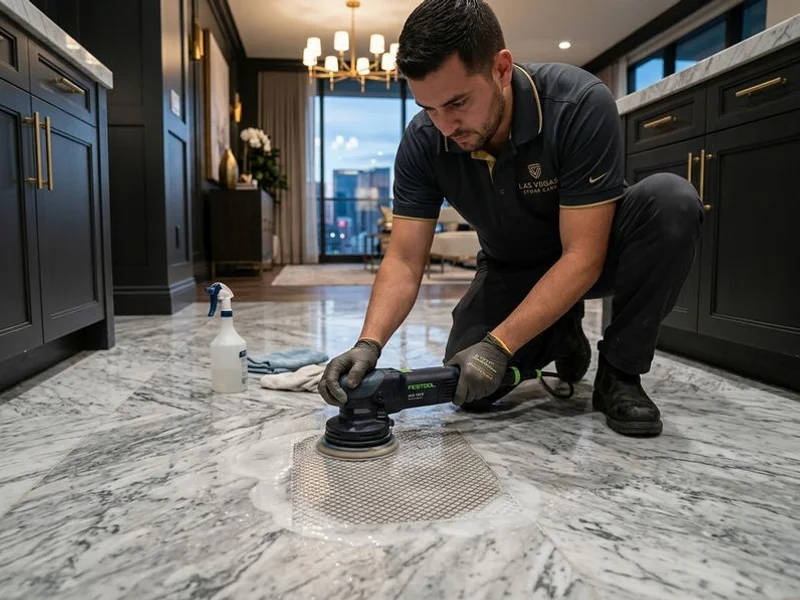
Diamond-pad honing removes a thin top layer of the marble. This action eliminates the etched zone and brings the surface back to a uniform sheen.
We start the mechanical restoration process using a coarse 400-grit diamond pad to level the damage. The abrasive pad cuts past the chemical burn to expose fresh stone underneath. A technician then progresses through an escalating sequence of finer pads.
Our standard progression typically moves through 800-grit and up to 3000-grit levels. From there, the surface is polished to your chosen finish. You can select a soft satin look, a semi-gloss, or a highly reflective mirror finish before a final sealer is applied.
Recent 2026 pricing data shows that replacing custom marble countertops in Las Vegas costs between $50 and $150 per square foot. Mechanical honing offers a significantly cheaper alternative.
Consider these benefits of professional repair:
- Cost savings: Restoring stone costs a fraction of total slab replacement.
- Speed: Most surfaces can be restored in a single visit.
- Safety: Full home protection keeps dust and moisture contained during the wet-polishing process.
For Las Vegas homeowners dealing with etched marble countertops, floors, or shower walls, scheduling professional marble polishing is almost always more cost-effective than replacement.
Need this work done in Las Vegas?
Our certified technicians handle this professionally with full home protection and a free, no-obligation on-site estimate.
See marble travertine polishingCommon questions
Is an etch mark the same as a stain? +
No. A stain is discoloration that sits in the stone, while an etch is physical surface damage from acid that dulls the polish. They are treated differently.
Can etch marks be polished out? +
Yes. Honing and re-polishing the marble removes most etch marks and restores an even finish.
Will DIY etch-removing creams work? +
They can help with very light surface dulling, but they don't lift deeper etching and can leave inconsistent finishes. For anything beyond a faint spot, professional honing produces a much cleaner result.
Related guides
Can Scratched or Pitted Travertine Be Repaired?
Travertine scratches, pits, and lippage are almost always restorable. Here's how filling, honing, and polishing work in real Las Vegas homes.
Honing vs Polishing: Which Finish Does Your Stone Need?
Matte honed or glossy polished? A practical comparison of slip resistance, maintenance, look, and best fit for each finish.
How Often Should You Seal Natural Stone in the Desert?
Resealing intervals for marble, travertine, and granite in the Las Vegas climate. Easy water-test method and signs your sealer has worn off.
Restore it, don't replace it.
Schedule a free on-site estimate from certified Las Vegas stone and tile technicians.