
How Stone Restoration Works: Grinding, Honing, and Polishing
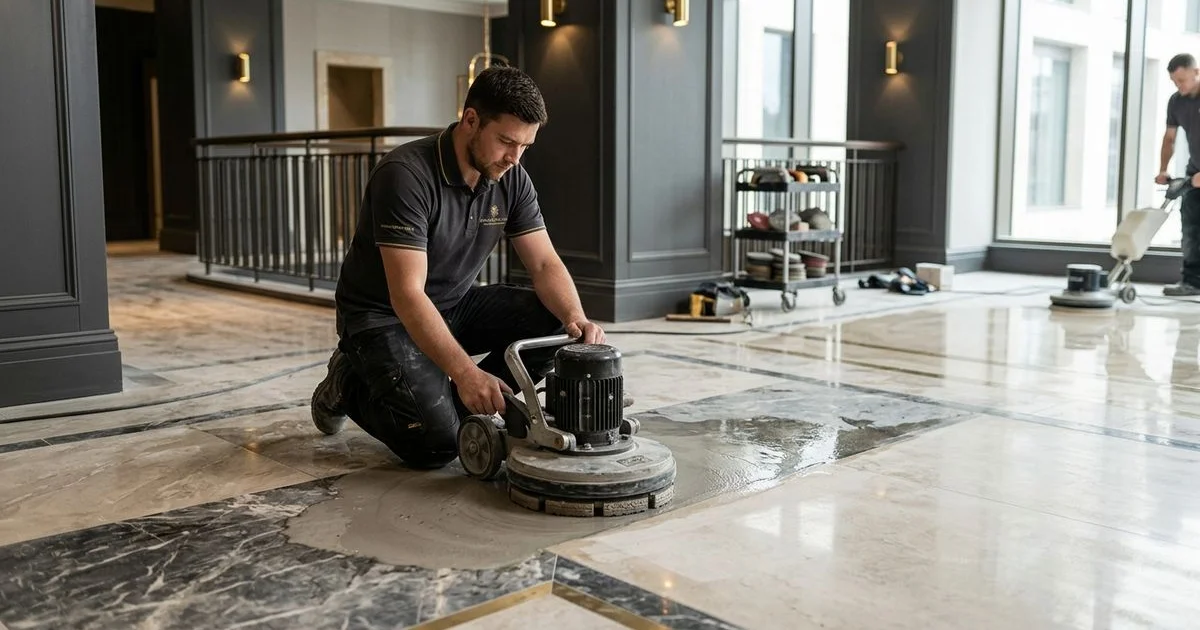
Many homeowners look at a heavily scratched marble floor and assume tearing it out is their only option. We hear this exact concern constantly during our initial consultations across Las Vegas.
The reality is that the professional stone restoration process is a highly controlled, scientific sequence. According to 2026 national flooring data, completely replacing natural stone floors costs between $50 and $125 per square foot. Our team frequently saves clients up to 90 percent of that replacement cost through targeted resurfacing.
Let’s explore the exact four-step abrasive methodology used to reset your finish. You will learn how each diamond grit works and what to expect during a professional visit.
The four diamond-abrasive stages of the stone restoration process
Our four-stage method uses industrial diamond pads to carefully strip away damage and rebuild a flawless finish. The progression relies on a strict sequence of grit sizes to achieve specific results. Each step prepares the surface for the next phase of refinement.
| Restoration Stage | Diamond Grit Range | Pad Material | Expected Result |
|---|---|---|---|
| Grinding | 50 to 100 Grit | Metal-Bond | Rough, leveled surface |
| Honing | 200 to 800 Grit | Resin-Bond | Smooth, matte appearance |
| Polishing | 1500 to 3000 Grit | Fine Resin-Bond | High-gloss or mirror shine |
1. Grinding
We start this aggressive first step by using coarse, metal-bond diamond pads to remove a thin top layer of the stone. The heavy friction physically erases deep scratches, acidic etching, and major surface damage. A common pitfall for inexperienced workers is attempting to rush this leveling phase.
Our technicians carefully clear the heavy 50-grit scratch pattern before moving to finer pads to prevent permanent swirl marks. The grinding stage is where the finish gets fully reset, no matter how badly worn the original stone was. This precise leveling resolves several primary physical issues:
- Deep gouges from moving heavy furniture.
- Uneven tile edges that cause tripping hazards.
- Severe chemical etching from acidic household cleaners.
- Pitting and natural stone degradation.
2. Honing
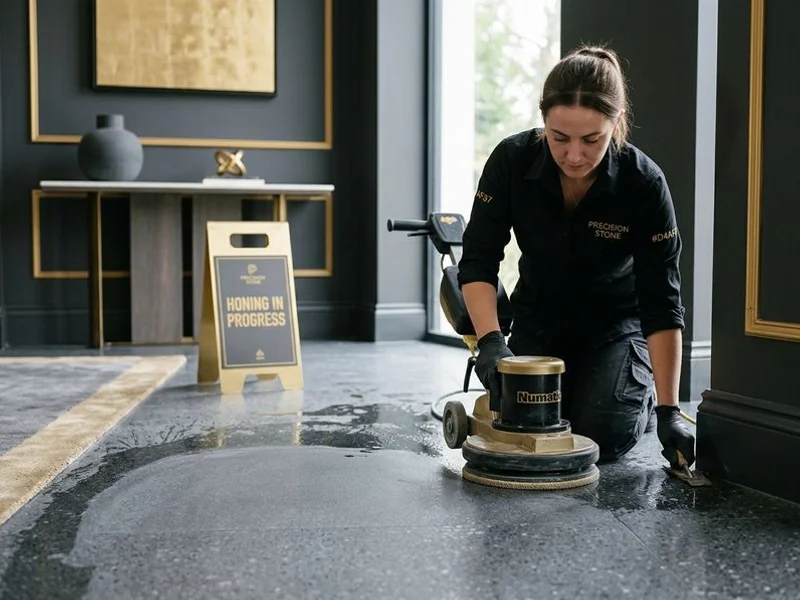
We switch our equipment to pads ranging from 200 to 800 grit for this intermediate step. The honing phase uses progressively finer resin-bond diamond grits to smooth the freshly ground surface. The primary goal here is to remove the aggressive scratches left behind by the initial grinding tools.
Our clients often choose to stop the process right here. By the end of the honing sequence, the stone develops a beautifully uniform matte appearance. A honed finish offers a soft, modern look that hides everyday dust much better than a high-gloss floor.
3. Polishing
We run our machines at 2,000 to 3,000 RPMs while applying 8 to 15 pounds of pressure for optimal results. Even finer resin pads bring the smoothed surface up to the exact satin, semi-gloss, or mirror sheen you desire. Each chosen level requires working through 1500-grit up to 3000-grit abrasives.
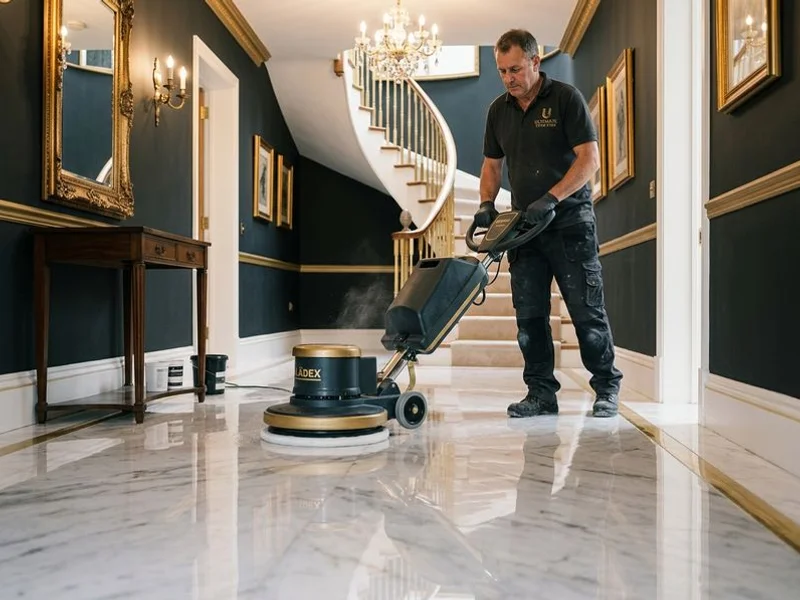
Our crews ensure the microscopic scratches vanish entirely until the stone surface reflects light perfectly evenly. A true professional polish comes entirely from the diamond friction, never from artificial chemical waxes that yellow over time.
4. Sealing
The final step is applying a pet-safe, water-based penetrating sealer to the newly refined stone pores. We mandate this protective layer to slow down future staining and block aggressive hard-water etching. This protection is absolutely vital for residents facing extreme mineral deposits.
According to 2025 water quality reports from the Las Vegas Valley Water District, the local tap water averages a punishing 304 parts per million (PPM) of hardness. Our technicians apply a premium fluoro-chemical sealer to prevent that extreme concentration of calcium and magnesium from eating into a fresh marble polish. This invisible barrier buys you valuable time to wipe up acidic spills before they cause permanent chemical damage.
Home protection throughout
Interior stone restoration requires heavy machinery and continuous water usage right inside your living space. We take extensive site prep measures to ensure your property remains pristine during the abrasive work. These strict protocols prevent slurry splashes and airborne dust from escaping the immediate work zone.
Before a single machine turns on, crews execute a mandatory masking routine:
- Heavy-duty waterproof mats cover adjacent hardwood or carpet.
- Area rugs and fragile decor get moved entirely out of the room.
- Baseboards and lower drywall sections receive protective plastic tape.
- Nearby stainless steel appliances and cabinets sit under full drapes.
Our crews run water control measures continuously alongside the grinding and honing equipment to trap dust instantly. The final result is a breathtaking floor that looks factory-new. You can review our marble and travertine polishing service to see exactly what this level of professional care looks like in practice.
Need this work done in Las Vegas?
Our certified technicians handle this professionally with full home protection and a free, no-obligation on-site estimate.
See marble travertine polishingCommon questions
What's the difference between grinding, honing, and polishing? +
Grinding removes deep damage and lippage, honing smooths everyday wear, and polishing brings up the final sheen. Sealing follows.
Is stone restoration messy? +
We use dust-control methods and protect your home with mats, masking, and coverings throughout the job.
Can the work be done in one day? +
Most residential restorations are completed in one to three days, depending on the square footage and the depth of damage.
Related guides
Can Scratched or Pitted Travertine Be Repaired?
Travertine scratches, pits, and lippage are almost always restorable. Here's how filling, honing, and polishing work in real Las Vegas homes.
Honing vs Polishing: Which Finish Does Your Stone Need?
Matte honed or glossy polished? A practical comparison of slip resistance, maintenance, look, and best fit for each finish.
How Often Should You Seal Natural Stone in the Desert?
Resealing intervals for marble, travertine, and granite in the Las Vegas climate. Easy water-test method and signs your sealer has worn off.

Restore it, don't replace it.
Schedule a free on-site estimate from certified Las Vegas stone and tile technicians.